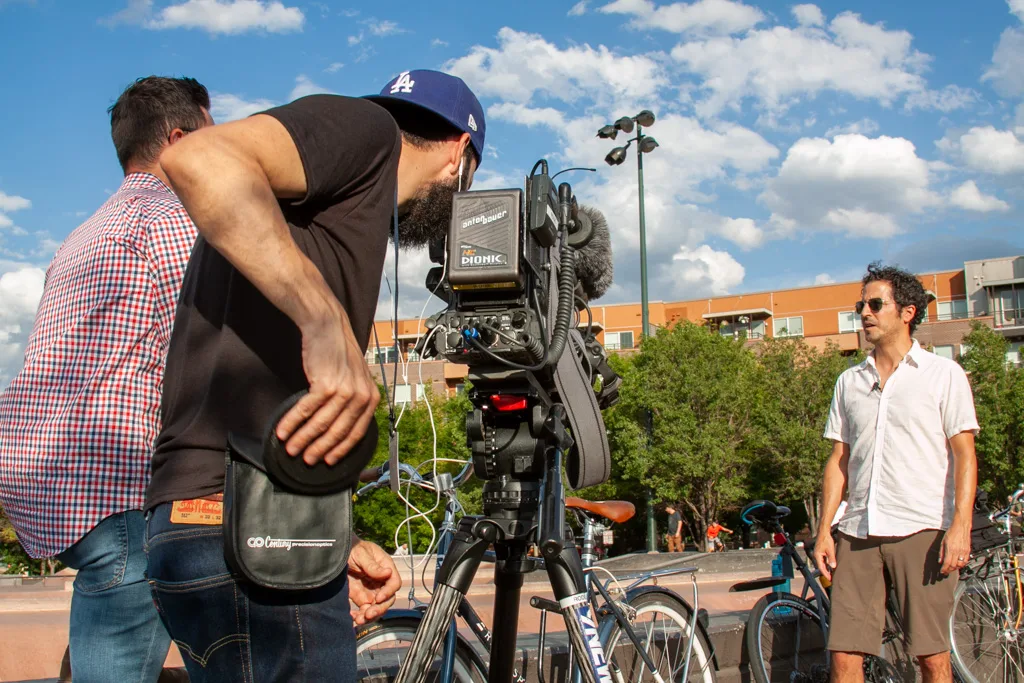
Transportation Advocates Gave Denver Mayor a 'D' Rating. Here's What He Says
Denverite - Paolo Zialcita
A coalition of mobility advocacy groups gave Mayor Johnston a 'D' on transportation, citing record traffic fatalities and slower bike lane construction than his predecessor. Johnston's office pointed to parking reform and microtransit expansion.
The Highway Lobby Spends Millions to Make Sure We Pay Billions
Union of Concerned Scientists - Kevin X. Shen
The highway lobby — oil, auto, roadbuilding, and trucking industries — employs 200+ lobbyists and spends over $100 million annually to block transit alternatives and lock in car-dependent infrastructure, driving up household transportation costs for everyone else.
Denver Streets Partnership: Protect Safe Street Funding - Safety Over Slush
Denver Streets Partnership
Denver's Transportation & Mobility Special Revenue Fund was created in 2021 from doubled parking meter rates to invest ~$15M/year in pedestrian, bicycle, transit, and Vision Zero safety improvements. Instead, the Johnston Administration has redirected millions to unrelated uses — in the 2026 budget, $8.4M (more than half the fund) is slated for a parking ticket appeals system. Denver Streets Partnership calls on City Council to amend the ordinance and restore the fund's original safety purpose.
Friday Video: It's AOC! On A Bike! With Streetsblog!
Streetsblog NYC
Rep. Alexandria Ocasio-Cortez joins Streetsblog for a bike ride through Queens, discussing the 34th Avenue Open Street and how bike infrastructure fosters community connection and civic engagement.
Parents on E-Bikes Are Transforming the School Run
The Economist
Family cargo e-bike sales are booming as parents replace the second car for school runs and kids' activities. Convenience — not environmentalism — is driving adoption, with parents citing skipped traffic, no parking hassles, and faster trip times on journeys of 1–3 miles.
What Can Be Done To Prevent More Bicycle Crashes in Denver?
Bucket List Community News - Cassis Tingley
Following the July 2025 death of cyclist Salih Koç in a hit-and-run at 38th & Tejon — an intersection Denver flagged as dangerous in 2021 but didn't fix — advocates call out the city's failure to fund bike infrastructure. Denver's new Vibrant Denver Bond includes no dedicated bike lane funding, and 2025 has already seen more cyclist deaths than all of the previous year. The article also includes a link to the 2021 Northwest Community Transportation Network in which Councilor Sandoval grandstanded and advocated for parking over people.
Bike Advocates Say They Were Left Out of Denver's Big Spending Plan
Denverite - Kyle Harris
Bicycle advocates say Mayor Johnston's $935 million Vibrant Denver bond package neglects dedicated bike infrastructure, while the city argues cycling improvements are embedded in broader transportation projects. (Editor: they are not)
Whatever Happens with Alameda, Advocates Say Public Trust in DOTI Needs Repairs
Denver7 - Jeff Anastasio
A full timeline of the events surrounding the Alameda decision in Denver. After DOTI reversed its finalized Alameda Avenue road diet plan under pressure from affluent residents, safety advocates and advisory board members say the process broke public trust and ignored years of community engagement.
The Hill of Hysteria: Why Every Car-Free City Policy Faces Public Resistance (and Then Acceptance)
The Lab of Thought - Alexander Premm
Describes the predictable three-phase arc of public response to car-reduction policies: loud initial opposition, a peak of resistance at implementation, then rapid acceptance as benefits become visible. Historical examples from Amsterdam and Paris confirm the pattern — resistance is temporary, acceptance is durable.
The Benefits of Great Places to Ride
PeopleForBikes - Martina Haggerty
PeopleForBikes makes the case for bike infrastructure investment across six dimensions: safety (protected lanes reduce injuries up to 90%), public health, local economic growth, transportation choice, job access, and air quality. Every dollar spent on active transportation saves approximately $24 in medical costs.
Denver Neighborhood Greenway Letter
Denver Bicycle Lobby, Bike Streets, Denver Streets Partnership
A joint letter from DBL, Bike Streets, and Denver Streets Partnership to Mayor Johnston and DOTI Director Amy Ford proposing Denver's first neighborhood greenway — adding two-way island diverters every 3 blocks on existing neighborhood bikeways to eliminate cut-through traffic and create low-stress streets for people who walk, bike, and roll.
MBAC (Mayor's Bicycle Advisory Committee) ride with Mayor Mike Johnston to highlight safety concerns, Vision Zero goals
Denver7 - Jeff Anastasio
Mayor Johnston participated in a 6-mile bike ride organized by the Mayor's Bicycle Advisory Committee to discuss cycling safety and Denver's progress toward Vision Zero. The ride highlighted concerns about 93 traffic deaths in Denver in 2025 and efforts to eliminate traffic fatalities by 2030.
Too Much of a Good Thing: Americans' Love of Big Cars Is Killing Them
The Economist
The Economist's analysis of 7.5 million crashes finds that the heaviest SUVs and pickups kill far more people than they save — for every life saved in the heaviest 1% of vehicles, more than a dozen are lost in other cars. A 1,000 lb increase in the striking vehicle raises the fatality likelihood by 66%. The average new car in America now weighs over 4,400 lbs.
The image depicts the "Hill of Hysteria" idea in the form of a bell curve. Initial resistance is then transformed into acceptance through time. Something policy makers miss, repeatedly. Do it and let it succeed.
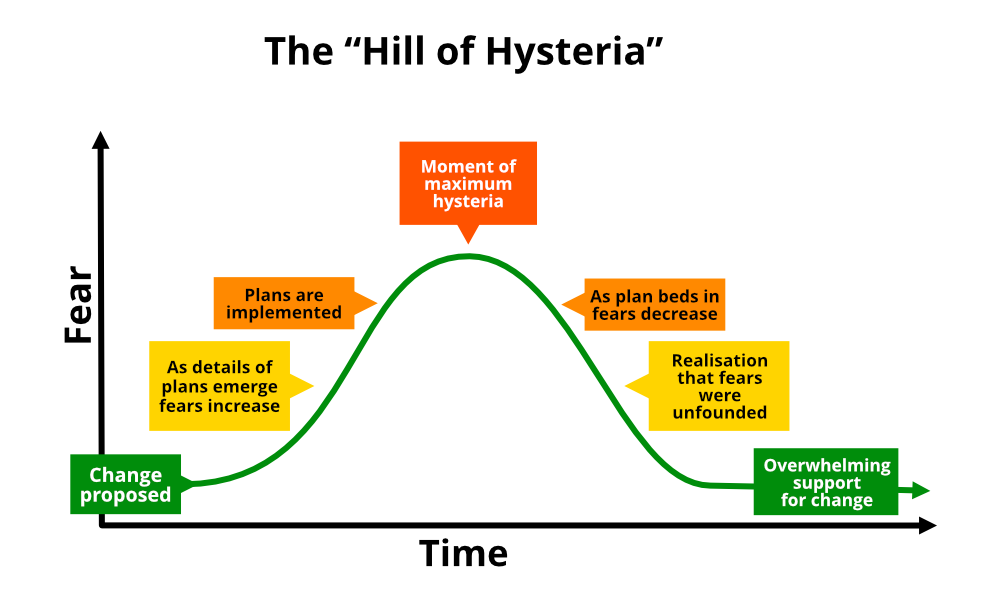
The 'Hill of Hysteria' – Why Changing Our Environment Is So Hard
Wandsworth Bridge Road Association
Explores why communities resist traffic-calming changes even when evidence shows they improve quality of life. Introduces 'Baseline Syndrome' and 'Motonormativity' to explain how car-dependent infrastructure becomes normalized — and how cities like Ljubljana and Amsterdam show that public support flips once people adapt.
All The Ways That Car Domination Harms Communities (Well, Almost All…)
Streetsblog USA - Kea Wilson
A review of nearly 500 studies finds that car culture causes roughly 1 in 34 deaths worldwide — 1.67 million annually from crashes and pollution. Organizes the harms into four categories: violence, health impacts, social injustice, and environmental damage.
Freedom to Move: Investing in Transportation Choices for a Clean, Prosperous, and Just Future
Union of Concerned Scientists - Kevin X. Shen et al.
UCS report finding that a system with improved transportation options and reduced driving could save up to $201 billion in energy infrastructure and $128 billion in public health costs through 2050. Documents how automotive and oil industries receive over 75% of transportation funding, and advocates for science-based policies supporting transit, walking, and biking.
The High Cost of Transportation in the United States
Institute for Transportation and Development Policy
The average American household spends $12,295 annually on transportation — 16% of after-tax income — with lower-income households and communities of color spending up to 30%. Contrasts U.S. car dependence with European transit models and finds that Transit-Oriented Development could save urban Americans ~$2,000 per year by 2050.
The War on Motorists: The Secret History of a Myth as Old as Cars Themselves
The Guardian - Peter Walker
Traces the century-long history of the "war on motorists" grievance — a rhetorical device invented by the auto industry in the 1920s to deflect blame for traffic deaths. The myth resurfaces whenever cities propose safety measures, despite roads having always been built at public expense and pedestrians bearing the cost of car-centric design.
2900 Block Larimer Street Closure Initiative: Community Feedback Summary
RiNo BID, Sasaki
Community feedback summary from December 2023 on the street closure initiative for the 2900 block of Larimer Street in Denver's RiNo neighborhood, compiled by the RiNo Business Improvement District.
A U.S. Diplomat Left Ukraine, Only to Die on a Washington-Area Road
The Washington Post - Theresa Vargas
U.S. diplomat Sarah Langenkamp was evacuated from Ukraine for her safety — then killed by a truck driver while cycling in a bike lane in Bethesda, MD. Her husband raised over $150,000 for street safety advocacy, arguing that painted bike lanes without barriers are "death traps."
Commentary: In Streetsblog Denver's Absence, Local News Has a Responsibility to Get Out from Behind the Windshield
Streetsblog Denver - David Sachs
Streetsblog Denver's founder argues local journalists display "windshield bias" when covering transportation, urging reporters to center vulnerable street users and hold officials accountable to their own safety and climate commitments.
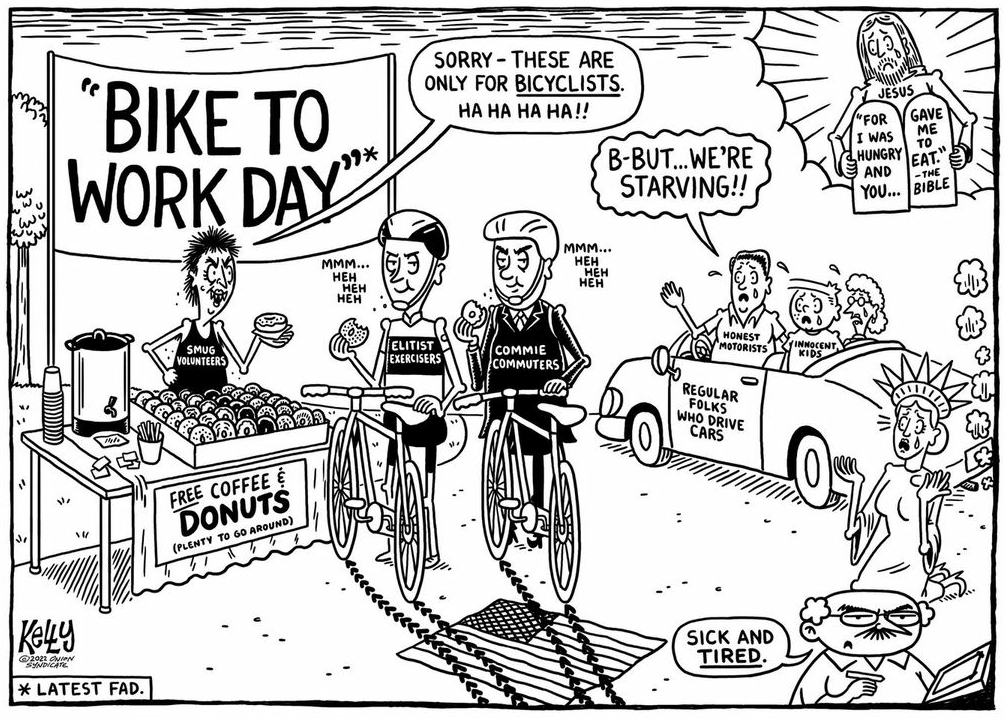
A satirical take on Bike To Work Day from the Onion's "Stan Kelly". The drivers are left to starve as the cyclists enjoy the free food.
A Slate investigation into how news organizations routinely botch coverage of pedestrian and cyclist fatalities — relying on police reports uncritically, using passive language that obscures driver fault, and treating crashes as isolated incidents rather than a systemic public safety crisis.
Study Shows Drivers and Cyclists Break the Law at About the Same Rate
9News - Steve Staeger
A University of Denver civil engineering professor surveyed thousands of road users and found drivers and cyclists break the law at nearly equal rates — drivers to save time, cyclists for self-preservation. Cities with better bike infrastructure saw fewer cyclist violations.
Denver's Focus on Bike Lanes and Road Space
9News - Marshall Zelinger
Marshall Zelinger demonstrates the different types of bike lanes and questions whether or not there is enough space. Denver officials debate why the city doesn't prioritize protected bike lanes like other countries. DOTI cites right-of-way constraints, while advocates argue the real barrier is political will, not space.
Bicyclists Take to Streets in Critical Mass, Drawing Attention to Three Fatalities in One Week
Denver7
Denver cyclists held a critical mass ride and die-in protest after three cyclists were killed in a single week — including championship racer Gwen Inglis and a 12-year-old boy. Advocates called for protected bike lanes, noting that 40 mph speeds leave cyclists only a 10% survival chance in a crash.
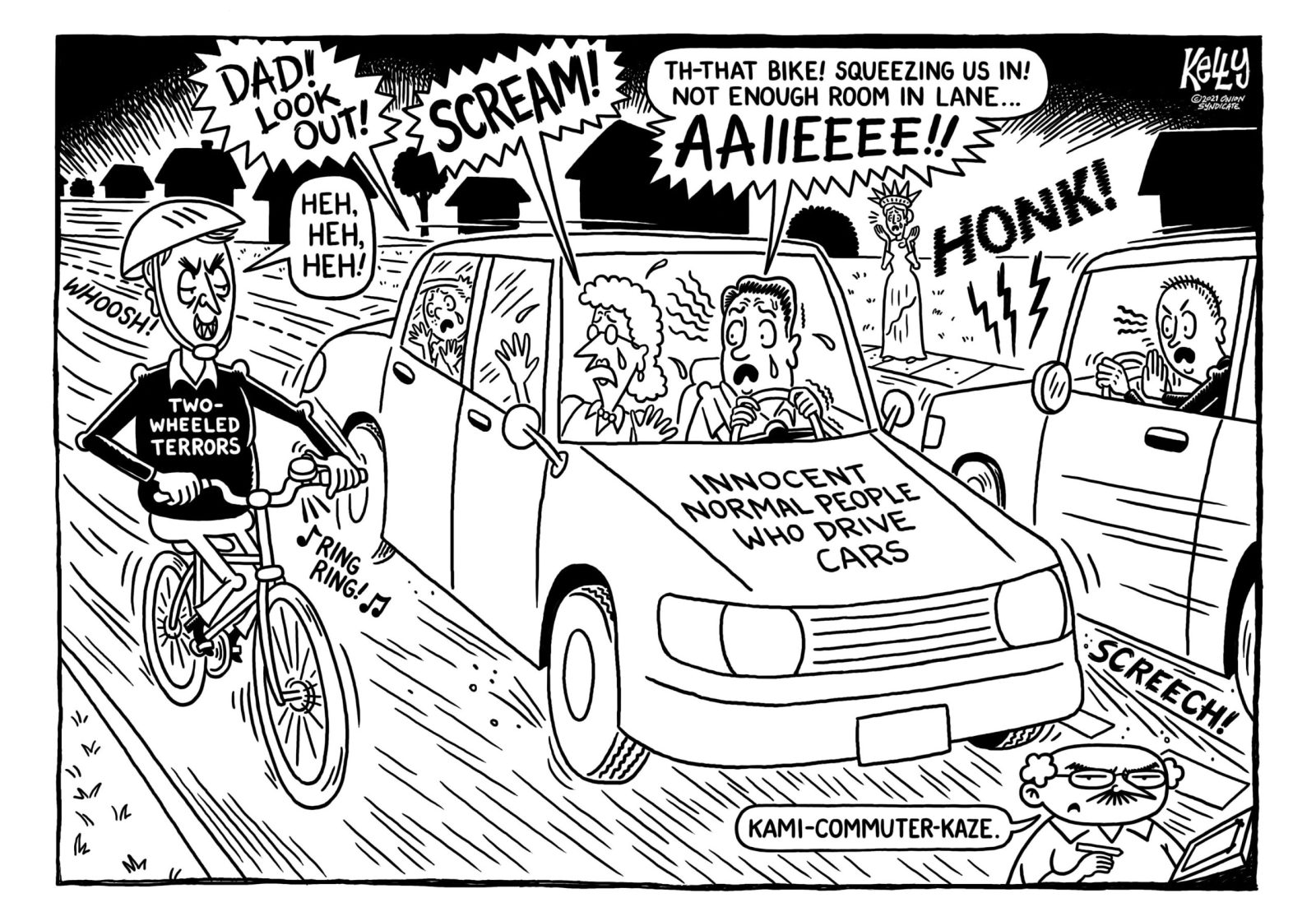
An Onion cartoon satirizing drivers' persecution complex: a cyclist merely ringing a bell sends "innocent normal people who drive cars" into a screaming, honking panic.
Hit-and-Run Cyclist Victim Dave Martinez Remembered at 'Ghost Bike' Ceremony
Streetsblog Denver - Andy Bosselman
Three dozen Denver cyclists gathered at 33rd & Zuni to install a ghost bike and honor Dave Martinez, 53, killed in a hit-and-run on January 7, 2019. His death came as Denver recorded 59 traffic fatalities in 2018 — a 16% increase — despite Mayor Hancock's Vision Zero pledge to eliminate traffic deaths by 2030.
Local roads are funded primarily through property taxes and the general fund — not driver fees. In Denver, only about 5% of road funding comes from usage fees, meaning non-drivers subsidize road infrastructure too.
Traffic Deaths Are Having a Moment in Denver
Denverite - David Sachs
The deaths of cyclists Scott Hendrickson and Alexis Bounds sparked public protests and renewed scrutiny of Denver's Vision Zero Action Plan, highlighting a pattern of preventable traffic fatalities the city has acknowledged but struggled to address.
Armed With Red Cups and Tomatoes, Bike Activists Around Denver and the World Unite to Demand More
Denverite - David Sachs
Denver's #RedCupProject, part of a worldwide day of action, inspired by the death of D.C. bike advocate Dave Salovesh. Activists lined bike lanes with red Solo cups and tomatoes in 20+ cities to show how easily protected lanes could be built — and how deadly unprotected ones are.
Cyclists Fill Denver Streets Calling on City to Act Fast
9News - Ryan Haarer
DBL's very first large action. Cyclists joined a critical mass ride through Denver organized by Jonathan Fertig following the deaths of two cyclists in recent weeks. Participants sent a mass auto-filled email to Mayor Hancock and all city council members demanding safe streets.
A satirical Onion piece imagining NYPD ticketing a deceased cyclist for blocking a bike lane, skewering the disconnect between rigid traffic enforcement and any sense of context or compassion.
When Covering Car Crashes, Be Careful Not to Blame the Victim
Columbia Journalism Review - Meg Dalton
A CJR analysis of how journalists use passive language ('car strikes pedestrian') and focus on victim behavior when covering crashes — inadvertently shielding drivers from scrutiny and normalizing traffic violence.
How America's Bike Helmet Fixation Upholds a Culture of "Unfettered Automobility"
Streetsblog USA - Angie Schmitt
Research finds that 24 of 25 U.S. cities prioritize helmet messaging over infrastructure in official bike safety communications — deflecting blame onto cyclists and shielding car-centric street design from scrutiny.
Path of Destruction: See the Downtown Denver Highway That Almost Happened
Denverite - Andrew Kenney
A 1967 urban renewal plan would have demolished much of Lower Downtown Denver to build a highway connecting I-25 to I-70. The Skyline Freeway was never built, sparing iconic blocks along Wynkoop and Larimer.
Vox: The high cost of free parking
Vox - Will Chilton, Paul Mackie, Mobility Lab
Vox's explainer on the hidden costs of free parking, A direct referenece to Donald Shoup's seminal book 'The High Cost of Free Parking'
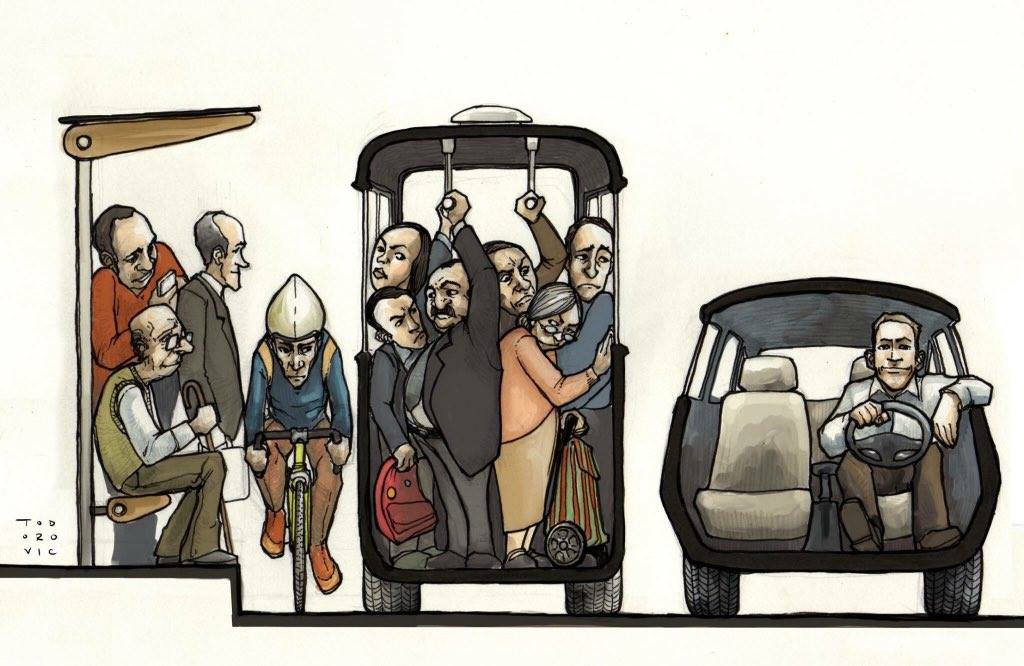
An artist and architect's depiction of the inequality of urban space.
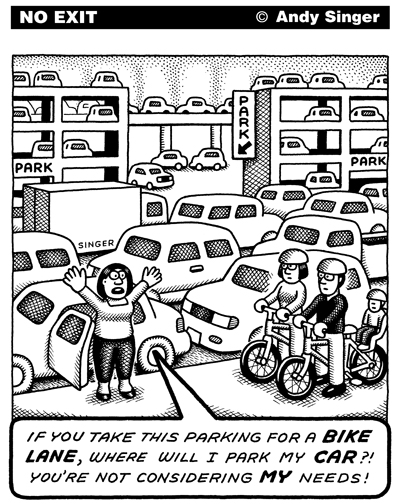
A driver asks a group of cyclists where they will park if they take away their parking spot. In the background is parking as far as the eye can see.
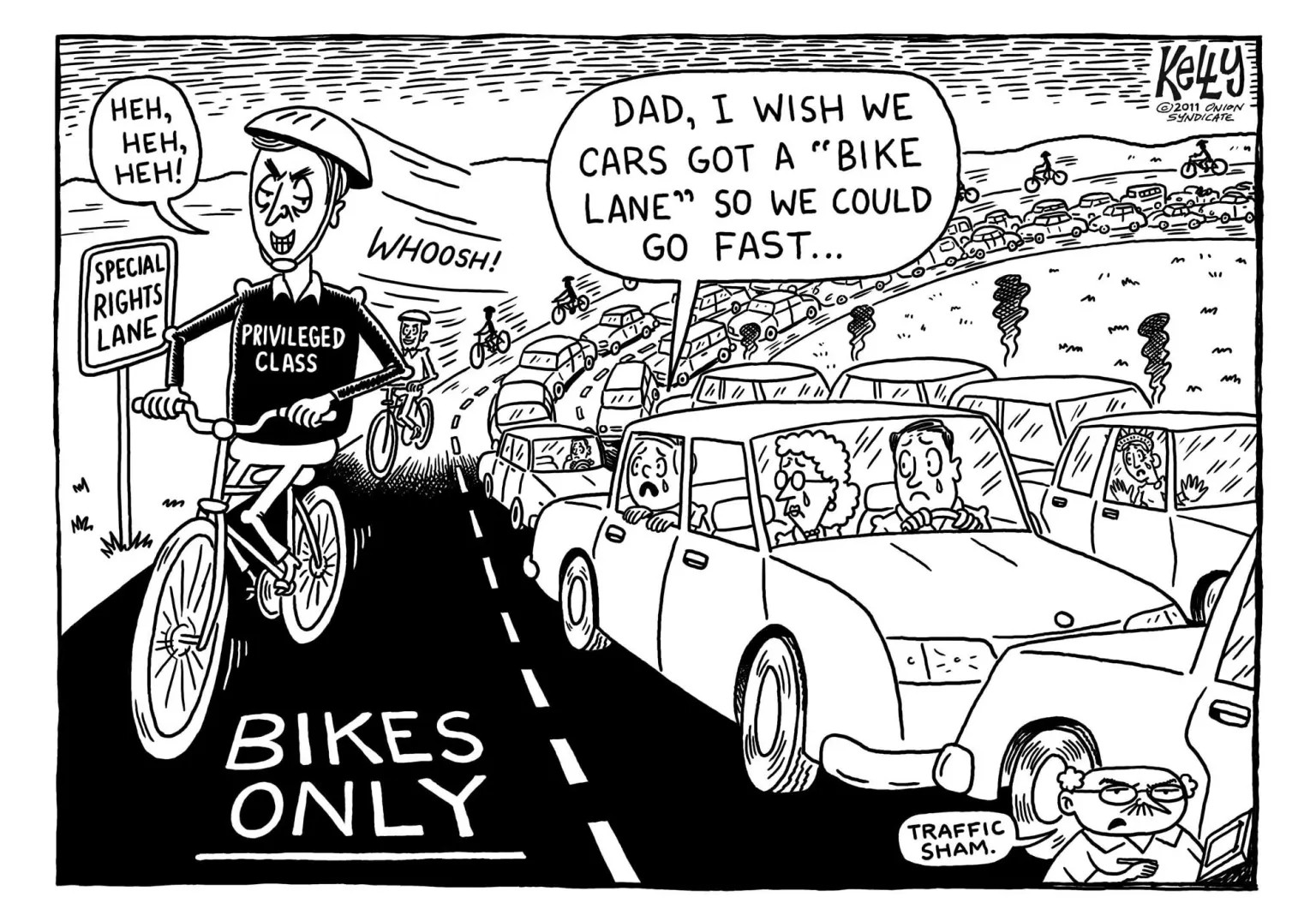
A satirical take on bike lanes from the Onion's "Stan Kelly". Driver's are envious of cyclists as they whoosh past them in their bike lane (oblivious to the fact that they get many more exclusive lanes).
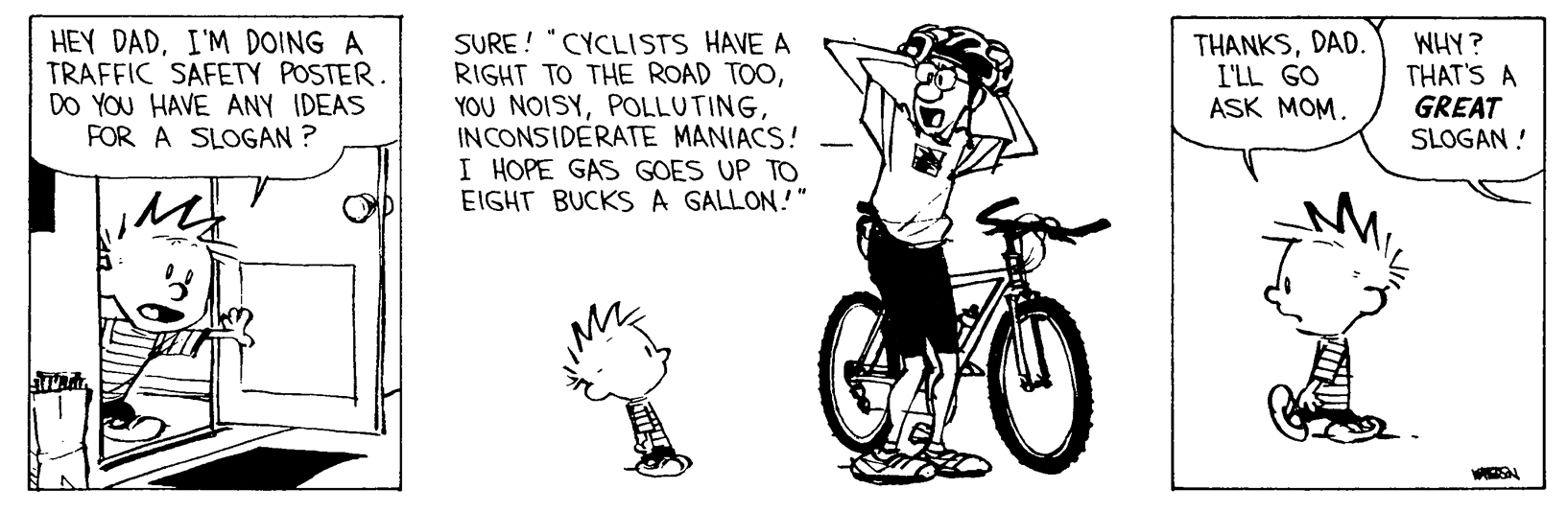
Calvin and Hobbes - 8 Bucks a gallon!
Homicidal Psycho Jungle Cat: A Calvin and Hobbes Collection - Bill Watterson
Bill Watterson was great.
Script: Hey Dad, I'm doing a traffic safety poster. Do you have any ideas for a slogan? Sure! "Cyclists have a right to the road too, you noisy, polluting, inconsiderate maniacs! I hope gas goes up to eight bucks a gallon!" Thanks, Dad. I'll go ask Mom. Why? That's a GREAT slogan!
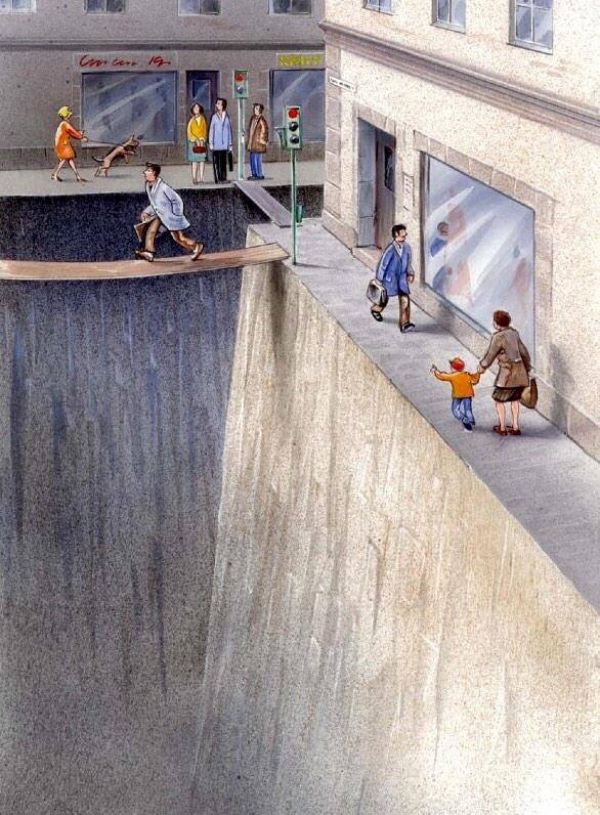
Jilg's Sidewalk
Swedish Road Administration - Karl Jilg
This picture illustrates the danger of poorly-designed streets, which the Swedish government set out to improve in the 1990s. It was originally created by Swedish artist Karl Jilg, who was commissioned by the Swedish Road Administration to explain new Vision Zero initiatives.
The War on Cars Podcast
The War on Cars - Goodyear, Sarah and Gordon, Doug
News and commentary on the worldwide fight to undo a century of damage wrought by the automobile — covering politics, policy, and pop culture. Hosted by Sarah Goodyear and Doug Gordon, the show approaches car dependence from all angles and advocates for cities that prioritize people over vehicles.
A monthly podcast investigating why people of color face disproportionate police aggression during everyday activities like walking, cycling, and riding transit — and what can be done about it. Hosted by urban planner and Rutgers professor Charles T. Brown, the show features critical conversations on equity, transportation justice, and systemic racism in public spaces.
Look Both Ways Podcast with David & Wes
Look Both Ways - Zipper, David and Marshall, Wes
Pragmatic conversations about all things transportation, exploring safety, congestion pricing, transit, urban planning, and policy with civil engineering professor Wes Marshall and transportation writer David Zipper.
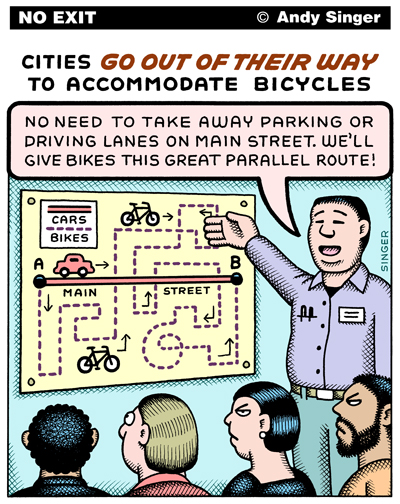
A presenter shows a group of irritated citizens the circuitous route they are given to travel versus cars.
How we should be reacting to NIMBYs.

A growing library of infographics and videos from the Institute for Transportation and Development Policy, a global nonprofit working on public transport, cycling and walking, sustainable urban development, and traffic reduction.